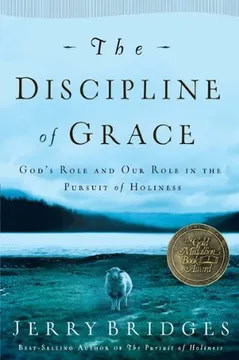
There are books that teach, and then there are books that reshape the way you see the Christian life. The Discipline of Grace by Jerry Bridges belongs to the latter. From the opening chapters, Bridges invites us into a deeper understanding of what it means to walk in holiness—not by striving in our own strength, but by relying fully on God’s grace. The book carries a simple but profound truth: the grace that saves us is the grace that trains us, sustains us, and empowers our daily obedience.
As I read, I found myself reflecting not just on the moment I first came to Christ, but on everything that has happened since. I am not just a testimony—I am a series of them. My life in Christ has been marked by triumphs, yes, but also by failures, assaults, and seasons so heavy I didn’t know if I would stand again. Yet in those moments, I’ve learned something sacred: instead of raising a fist to God in frustration, I lift my hands with open palms and pray for grace. Again and again, God has met me there. And Bridges’ message strengthens that conviction.
Holiness and Grace Combined
Bridges makes it clear that holiness and grace are not in competition—they are inseparable partners in the Christian life. The grace of God does not merely rescue us from sin’s penalty; it also empowers us to live differently.
“Your worst days are never so bad that you are beyond the reach of God’s grace, and your best days are never so good that you are beyond the need of God’s grace” (page 19)
That truth reorients my heart. It reminds me that holiness is never something I achieve for God—it is something God accomplishes in me as I yield to Him.
Before stressing the urgency of holiness, Bridges takes care to define it. Holiness, he explains, is both a separation from sin and a dedication to God. It is the gradual shaping of our desires, motives, and behaviors into alignment with Christ’s own character. Bridges describes holiness as…
“obedience to God’s revealed will, motivated by love, and empowered by the Holy Spirit.” (page 38)
In other words, holiness is not merely avoiding what is wrong—it is learning to love what is right because we love the One who first loved us.
Holiness, then, is not optional for the believer (1 Pet. 1:16, NIV). It is the natural fruit of a life touched by grace. But Bridges is careful to show that we do not pursue holiness to earn God’s approval. We pursue holiness because God has already given us His approval in Christ. Grace does not lower the standard of holiness—it supplies the strength to live it out.
And that understanding has shaped how I share my testimony. I do not speak of holiness as a destination I have arrived at, but as a lifelong journey—one marked by setbacks, repentance, and God’s continual mercy. Grace does not minimize my need to grow. It magnifies the God who is patient with me as I do.
God’s Role and Our Role
One of the most clarifying contributions of this book is how Bridges explains the relationship between God’s work in us and our work in pursuing spiritual growth. He emphasizes that transformation is primarily the work of the Holy Spirit, but God calls us to actively cooperate with Him.
Bridges writes, “We are 100 percent responsible for our spiritual growth, but we are 100 percent dependent on the Holy Spirit to enable us to grow” (page 67)
That tension is where the Christian life is lived. We don’t sit passively and wait for holiness to just happen, but we also don’t rely on sheer willpower to become Christlike.
This connects deeply with how we encourage believers to examine their own stories within My Story His Glory. We invite people to slow down and discern what season they are in—whether they are enduring an assault from the outside or wrestling with a failure from within. Our first instinct is often to respond with human effort: tightening our resolve, hiding our weakness, or trying to “fix” ourselves. But the real turning point comes when we apply biblical truth instead of self-reliance. As we do, we begin to discover the spiritual benefits God gives in these moments—humility, dependence, endurance, and a deeper awareness of His grace. Growth does not come from trying harder; it comes from surrendering more fully to the God who is already at work in us.
Daily Gospel Application
Perhaps the most practical teaching in the book is the call to preach the gospel to ourselves daily. Bridges explains that we drift naturally toward a performance-based relationship with God—where we feel closer to Him when we perform well, and distant when we fail. I’ve lived that. Many of us have.
But the gospel frees us from that cycle.
“To preach the gospel to yourself means you continually face your own sinfulness and then flee to Jesus through faith in His shed blood and righteous life” (page 49)
When believers learn this mindset, instead of trials and tribulations, you’re experiencing testimonies-in-progress, and your faith in Christ becomes richer, deeper, and more honest. We can speak about our struggles without shame because our hope is no longer in our performance—but in Christ’s finished work.
Why This Book Matters
Correcting Misconceptions
One of the strengths of this book is how Bridges dismantles false ideas about grace and discipline. Grace does not encourage laziness. Discipline does not equal legalism. Holiness is not perfectionism. Instead, grace motivates obedience out of love, not guilt.
Practical Spiritual Growth
Bridges doesn’t just teach—he guides. This book gives clear, actionable ways to pursue spiritual disciplines such as prayer, confession, and Scripture meditation while keeping grace as the power source rather than self-effort. As someone who has walked through trials—health scares, fears, and even moments of deep spiritual fatigue—this was deeply encouraging.
Encouragement for Struggles
Bridges writes with compassion for believers weighed down by guilt. If your testimony feels “messy,” this book reminds you that God is not done with you. Grace is not just forgiveness—it is fuel for transformation.
Key Takeaways
- Grace and Discipline Work Together. Spiritual maturity is not earned, but it is pursued.
- Preach the Gospel to Yourself Daily. Your confidence must rest in Christ’s finished work, not in your fluctuating performance.
- Holiness Is a Lifelong Journey. Sanctification is slow, steady, daily—and God is patient with us.
Conclusion
The Discipline of Grace by Jerry Bridges is not just a book to read—it is a book to practice. For believers who want to grow in holiness without falling into shame or self-righteousness, this is a foundational resource. It gives language to the grace God has been working into your story all along.
If you are developing your testimony, rebuilding your faith, or simply longing to walk closer with Jesus, this book will meet you where you are. And it will remind you that the God who saved you is the same God who is shaping you—day by day, step by step, grace upon grace.
Your story isn’t finished. And grace is still writing it.